Grease Trap Cleaning in Aurora, CO
Backed-up grease trap, inspection coming up, or routine pumping due? Speak with a service provider serving Aurora to discuss pricing, check availability, and book your service.
Call to Book Service(877) 704-1271Your call connects you with an independent service provider. Confirm pricing and book directly with them.
- Indoor grease traps and buried interceptors
- Routine service, backups, and inspection preparation
- Restaurant, school, hotel, hospital, and food plant kitchens
Book by Phone
Call about an urgent issue or schedule your next pumping.
Call to Book(877) 704-1271- 1Enter your ZIP code Follow the phone prompt to reach a company serving your area.
- 2Describe what you need Explain the problem or the service you want to schedule.
- 3Confirm and book Ask about pricing, what is included, and the next available appointment.
Which situation are you in?
Need help now or planning your next service? Choose the situation that matches your kitchen.
Backed up or overflowing
A full trap can stop separating grease, and water may back up into sinks or floor drains. While you arrange service, take these steps:
- Keep grease out of the drains. Collect greasy scraps in the trash and keep used cooking oil in its storage container.
- Turn off fixtures feeding the trap. Stop using connected sinks and dishwashers until the backup is addressed.
- Keep staff clear of the overflow. Redirect kitchen traffic so people do not walk through the backed-up water.
- Photograph the trap and check records. Take a picture of the problem and find the last pumping date in your service records.
Smell or slow drains
A sour smell near the floor drain or a slow sink after a rush can mean grease and solids are building up in the trap, though a blocked line is another possibility. Many local programs ask for cleaning before grease and solids reach 25 percent of the trap’s depth. Arranging pumping now can help prevent an overflow and its cleanup.
Call About Odors or Slow DrainsInspection due or notice received
Inspectors may ask to see cleaning records, and many areas also ask for a written grease management plan. If your log has gaps, arrange to have the trap pumped and the service recorded before the visit. Ask the provider for a disposal manifest, then keep it with your service records.
Call About an Inspection DeadlineRoutine schedule, new opening, or several locations
Opening a kitchen? Line up a provider before service begins. Many sewer authorities ask for a grease management plan and cleaning records. If you manage several locations, ask about one schedule and one set of records for all of them. For a kitchen already running, a standing pumping schedule can help you stay within the limit set locally.
Call to Schedule PumpingGrease trap and interceptor services
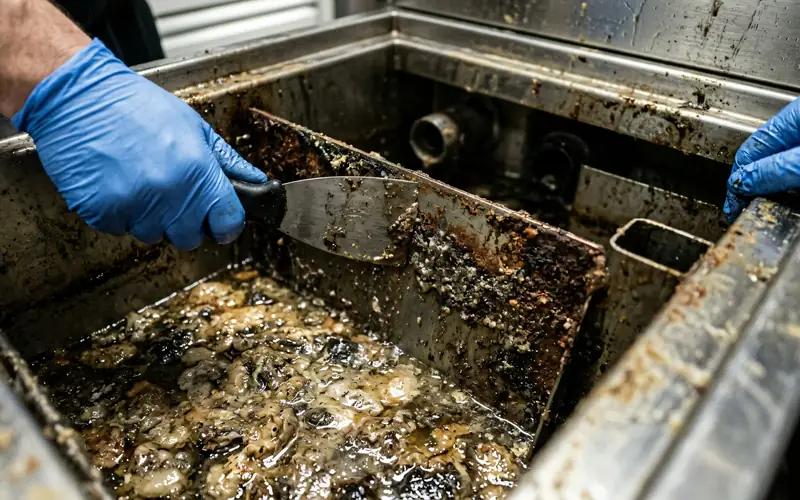 Indoor trapsGrease Trap CleaningFor kitchens with grease stuck to trap walls or baffles, cleaning goes beyond removing the contents.Learn about cleaning →
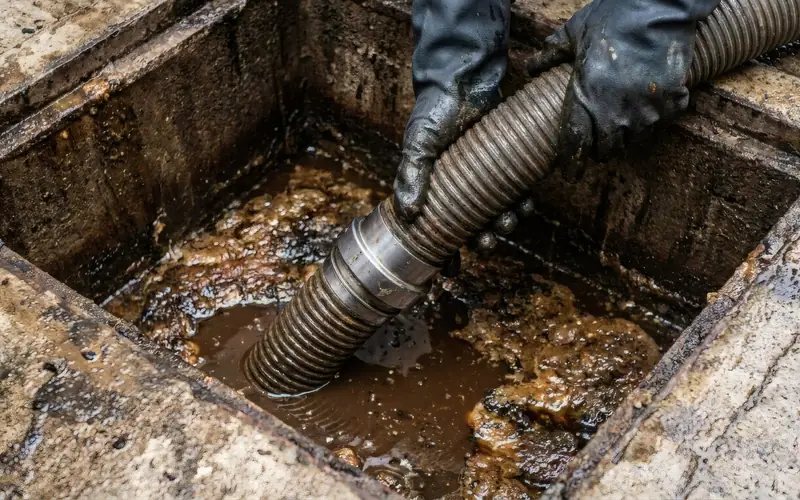 Indoor trapsGrease Trap PumpingFor kitchens with a trap due for service or grease buildup that may be slowing the drains.Learn about pumping →
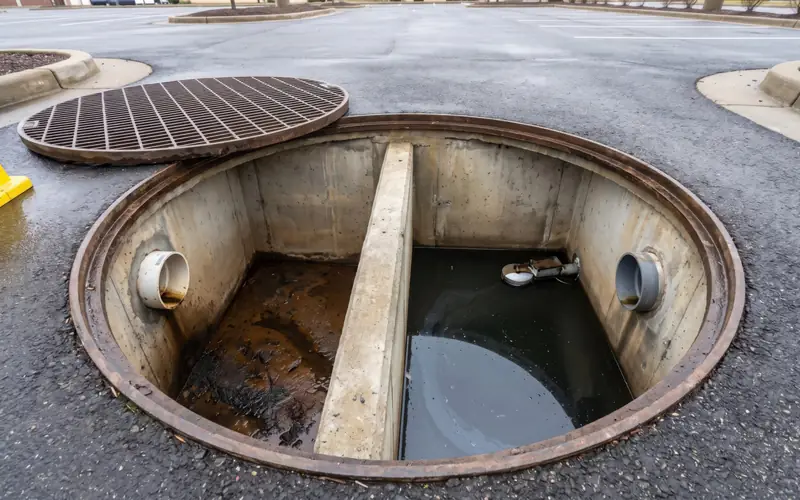 In-ground interceptorsGrease Interceptor CleaningFor kitchens with an outdoor interceptor, choose cleaning when grease coats internal parts or an inspection is coming.Learn about interceptor cleaning →
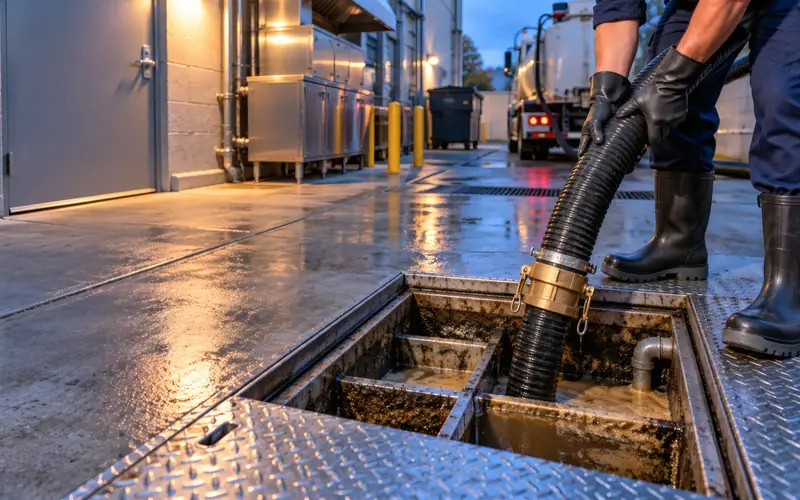 In-ground interceptorsGrease Interceptor PumpingVacuum truck pump-outs on a regular schedule, with records for your inspector.Learn about interceptor pumping →
Who uses this service
A fryer, grill, or dishwasher can send grease into kitchen drains. This section explains where a trap or interceptor fits.
- Restaurants and cafes
- Fast food
- School and university cafeterias
- Hotels
- Hospitals and care homes
- Food processing plants
- Grocery delis and bakeries
- Caterers and commissaries
Ready to Book Grease Trap Cleaning?
Discuss your kitchen’s needs, confirm pricing, and book an available appointment.
Grease trap or grease interceptor?
Unsure whether it’s a trap or an interceptor? You can still call; these differences help you describe what’s on the property.
- Location
- Indoors, under a sink or set in the kitchen floor
- Flow rating
- Roughly 20 to 100 gallons per minute
- Which kitchens
- Cafes, small restaurants, bars, coffee shops
- Typical pumping interval
- Every 1 to 4 weeks for most busy kitchens
- Location
- Outdoors, buried below a parking lot or yard
- Typical size
- Roughly 500 to several thousand gallons
- Which kitchens
- High-volume restaurants, schools, hospitals, food plants
- Typical pumping interval
- Every 1 to 3 months, depending on volume and local rules
What Affects Grease Trap Cleaning Cost?
The price depends on the unit and the work required. When you call, describe your setup and ask what the quote includes.
Size and number of units
Your trap or interceptor’s capacity, if known, and how many units need service.
Current condition
When it was last pumped and whether you have a backup, odors, or slow drainage.
Access and scheduling
Where the unit is located, access restrictions, and your preferred service time.
Disposal and additional work
Whether disposal, service records, and any additional cleaning are included in the price.
Not sure what size unit you have? You can still call. Describe its location and the issue you are having.
Questions to ask before you hire a pumper
Before you book, ask what the service includes, which records you will receive, and whether any additional charges may apply.
- 1Do you have permission to haul grease waste here?Hauling requirements vary by location. Ask what documentation applies to your kitchen and keep a copy with your service records.
- 2Will you provide a disposal manifest afterward?A manifest shows where the waste was taken, giving you a record to keep alongside the service paperwork.
- 3Will you pump out the entire tank, including settled solids?Skimming grease from the surface leaves sludge at the bottom, reducing the room available for wastewater.
- 4Will you check the baffles and outlet tee?Damage or loose fittings can let grease move past the trap. A note on their condition helps you plan repairs.
- 5Can you set up a recurring pumping schedule?Regular service is easier to track when dates are planned ahead. Check the schedule your city or sewer district requires.
- 6Will you fill in the cleaning log after service?Many local programs require a record of each cleaning, including the date, what was removed, and the trap's condition.
What to Have Ready When You Call
A few details can help the service provider assess your needs and discuss the right appointment.
- Your service address and ZIP code.
- Whether you have an indoor grease trap or an outdoor interceptor.
- The unit’s size, if known.
- Approximately when it was last pumped.
- Any backup, odors, slow drainage, or inspection deadline.
- The number of units or locations needing service.
Share what you know. You do not need every detail before calling.
Grease trap service across Aurora, CO
Need grease trap or interceptor cleaning at your Aurora business? Call about routine pumping, a current backup, or service ahead of an inspection.
Provide your address and ZIP code to confirm coverage. You can discuss access, preferred appointment times, and recurring service when you book.
Frequently Asked Questions
How often should a grease trap be cleaned?
A busy kitchen sending greasy wastewater through a small indoor trap may need a different cleaning schedule than one using an outdoor interceptor. Menu and wastewater volume matter, and your city or sewer district may have requirements. Ask the provider to help set a schedule based on your equipment and kitchen use.
What does grease trap cleaning cost?
Pricing varies with the size and condition of the unit, access, and the work required. Call to discuss your setup and request pricing. Before booking, confirm whether the quote includes disposal, service records, and any additional charges.
Do providers clean grease interceptors as well as indoor grease traps?
Some companies clean both indoor grease traps and outdoor interceptors; others work with only certain equipment. When you call, say which one you have and give its size if you know it. Mention whether the lid is indoors or outside so the provider can confirm they handle that equipment.
What happens if I delay grease trap cleaning?
As grease and food solids build up, less room remains for wastewater to pass through the trap. Slow drains, odors or a backup can follow, though a blocked line can cause similar symptoms. Delaying service may also make it harder to meet local cleaning requirements or keep service records current.
How long does grease trap pumping take?
The work depends on the equipment's size, how much grease and settled waste it holds, and whether the lid is easy to reach. Cleaning baffles or checking the outlet tee can add to the work. Describe the trap or interceptor so the provider can estimate what is involved.
Who will I speak to when I call?
After the ZIP-code prompt, you will speak with an independent service provider serving your area. You can discuss the work, confirm pricing and availability, and book directly with that company. This website helps connect callers with service providers; it does not perform the cleaning.
Need Grease Trap Cleaning in Aurora, CO?
Urgent issue or routine maintenance? Call to discuss your service needs, confirm pricing, and book an available appointment.
Call to Book Service(877) 704-1271